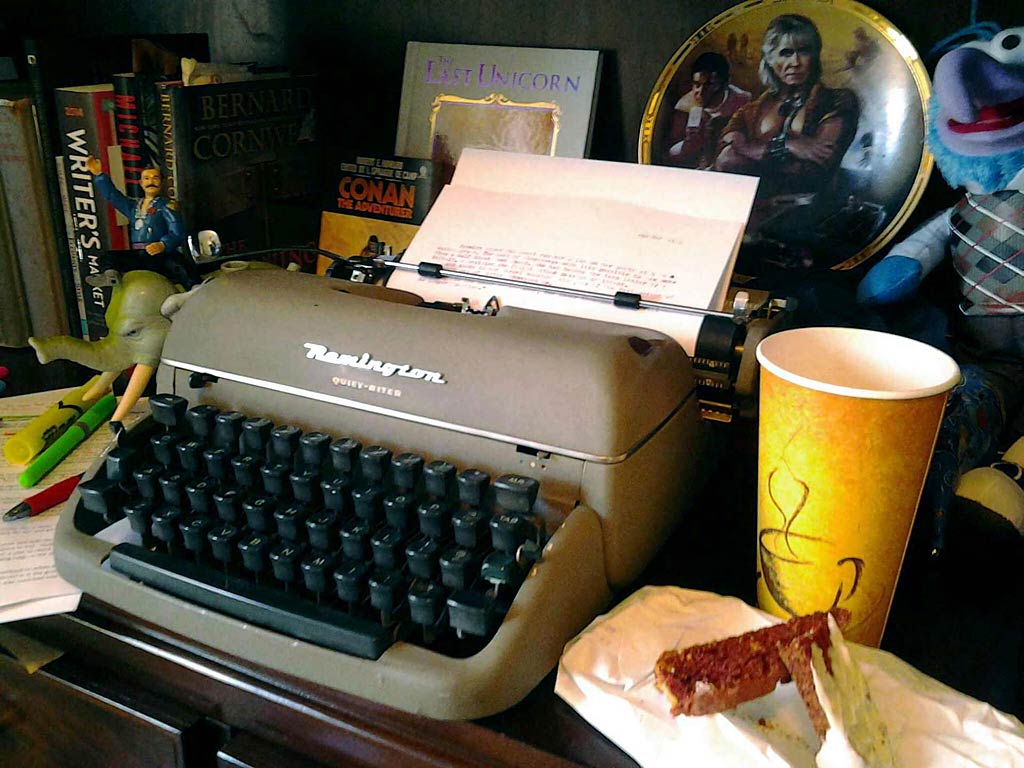
It’s a simple concept, one you learned way back in grade school; Actions Speak Louder Than Words.
It’s a big part of why talking head scenes suck. Because talking head scenes have no actions (for all intents and purposes)… just words…
But there’s a clarification here that will help you become a better writer;
Character action is a massive opportunity for subtext.
And what makes action so incredibly potent, is that this subtext can be literally anything you want it to be.
Character Action is a supercharged tool for controlling your narrative.
Any narrative element, from characterization and character arc relevance, to plot, Master Theme, tone, mood, author’s voice, genre, literally anything can be subtly expressed through character action.
“Doing something,” sets that thing IN MOTION and opens cognitive process in the reader:
- Why did this character just do that now?
- Why did they choose to do that specific thing and not some alternative?
- Why did they choose to do that thing, the way they are doing it?
- How does this relate to what the character has done before?
- What are the likely consequences of this action?
A whole host of instant internal questions, processed by the reader both subconsciously and consciously.
Notice that working with this level of subtext and narrative manipulation, is a direct line to controlling reader expectations… and in turn, a BIG portion of the means of controlling a reader’s overall experience.
Work it in a little or a lot… just get it in there.
We’re gonna watch a clip in a second… not every scene of your narrative has to be loaded with such potent character action.
You don’t need to sit there with nuclear physics level formulas plotting out every character’s smallest action. You should certainly pay more attention to your key, high-drama, climatic scenes… but deep diving in the extreme isn’t necessary.
What is necessary, is understanding the value of character action and keeping it present in your writing as much as possible.
Again, this is a primary short coming of talking head scenes. While dialogue can (and should) of course, carry subtext, without reinforcement by action, it’s severely handicapped.
When you understand character action, you’ll start to see the code of fiction:
Why detectives always smoke.
Why dramatic romantic moments often happen in the rain.
Why the smart guy always wears glasses.
Why the stakeout cops always drink hot coffee.
These are never random decisions in a story, but the writers latching on to some sort of stimuli for character action, in otherwise talking head scenes. When all is lost to dialogue, clever writers fall back to character action that reinforces characterization… it’s always available and always welcome by the reader.
When I work with folks, I sometimes fall back on explaining concepts with live action video clips. Most writers get concepts more efficiently when they see them in action.
Going over this concept recently with a client, I came across this clip (The Scene Tywin Tricked them All into Revealing Their True Nature). The clip alone from Game of Thrones would have been adequate enough to share with the writer, explaining the strength and need of character action…
but as it turns out, this Game of Thrones fan bloke, went ahead and broke down the character action all on his own. Thanks internet dude!
Of course, this is all one person’s interpretation of the character action and this person is NOT a GOT writer.
Wether he nails the interpretation or not, isn’t really important. Watch the 12 minute clip and see first hand, how character action NOT dialogue, opens this huge flow of subtextual information for this viewer (reader).
The amazing volume of what is said… without a single word.

In this instance of the GOT clip, this scene works with extremely subtle character actions…
“Walking and sitting.”
“Moving a chair.”
These are low-energy, mundane character actions… YET in the context of GOT and specifically in this scene setup, they are immensely powerful actions.
Still another show of how powerful character actions are as a narrative tool. Something as simple as walking and talking your seat can speak as loudly as entering the Dilithium Chamber and sacrificing your life to realign the crystals. ▪
About the Author —
If you enjoy this article, please share the direct link on your social media.
Newcomer or veteran writer, if you’re working on a project that needs commercial success, Nick urges to you read this intro article.
Nick Macari is a full-time freelance story consultant, developmental editor and writer, working primarily in the independent gaming and comic markets. His first published comic appeared on shelves via Diamond in the late 90’s. Today you can find his comic work on comixology, Amazon, and in select stores around the U.S.