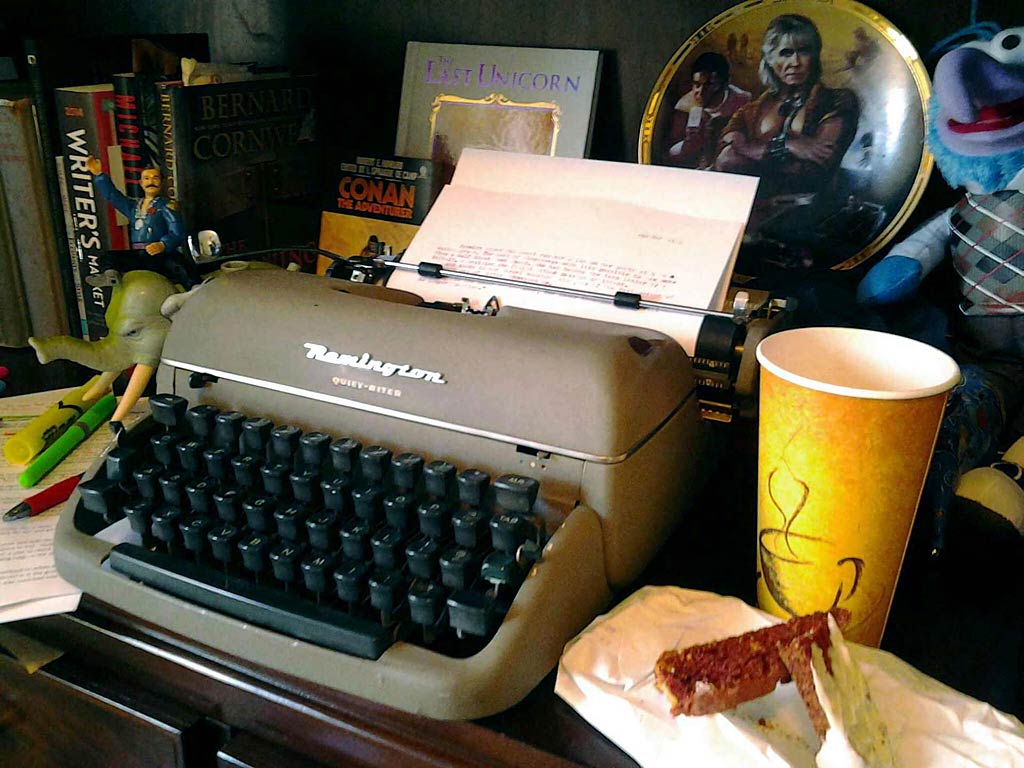
Y’all know I don’t just write comic books, I write/edit in every medium and often help people with their novels, screenplays, whatever…
This article is gonna talk more specifically about novels for a second, but then we’ll bring back to comics at the end.
You’re working on a modern day gangster story and your undercover cop finally gets an audience with Mr. Big, the main bad he’s trying to bust. You do something like this (I’m not trying to write this well, I’m just vomiting something out so you can get the idea of what I’m explaining);
“The black suede seats of the limo look like they haven’t been cleaned in over a decade. The smell of cigarettes, sex and wet laundry lingers so thick, you ask the driver to throw on the AC… but that smells even worse. Like pure refrigerant and mint car refresher. Half the over head lightbulbs are burned out, throwing irregular shadows across you and the two Goombas sitting across from you.”
“Jumping out of the limo like the last skydiver on a plane with engine failure, you rush through the front door to El Loco, Mr. Big’s latest downtown hangout and biggest money laundering business. Bright red lights flood the foyer, casting you and your escort in a demonic glow. The glass dividers of the foyer haven’t been cleaned in some time, stained with yellow streaks, dust and dead bugs.”
“After the foyer, a long hall with brown plush carpeting makes its way toward a bank of elevators. A ceiling lined with antique patina copper and walls covered in blistering off-white paint meet you. The intense aroma of honey vanilla and cheap wax drifts past your nose as you near a small wooden table across from the elevator doors loaded with a dozen Ikea candles.”
“The elevator makes a recurring ticking sound as it slowly makes its way to the penthouse floor. A miticulously clean ceiling mirror watches everything beneath it, unfortunately, nothing else about the elevator has been cleaned in months. Gum, garbage, used condoms all litter the elevator floor. The cramped quarters and a broken fan give no escape as Goomba number one cracks a rat, filling the tight quarters with a smell of rotten eggs and rotten ham. The struggle to gag becomes so great, you just hold your breath for the rest of the ride.”
“Finally, the elevators deposit you directly into the penthouse living room. As you move out onto the three wide marble steps, Mr. big looks back over his shoulder from the couch. “Finally, the fuckin’ undercover cop is here. Vinny open the window. Unless he tells me something I don’t already know, he’s going back to his car the fast way.” Goomba number two pushes you hard into the seat across from Mr. big, who takes a long puff on his cigar giving you the hairiest eyeball you’ve ever seen.”
So I actually don’t do the problem real justice here, because I’m only giving you a few brief paragraphs and it’s difficult for me to replicate really poor flawed novice writing. Anyways…
The problem of course, is hitting your reader over the head with environmental detail after environmental detail with environments that have nothing to do with the important part of the scene. Details with NO narrative drive.
The significance of this fictional narrative prompt, is the actual meeting with Mr. Big.
- Who cares how clean the seats are in the limo?
- What does the foyer ceiling have to do with anything?
- Honey vanilla scents near the elevator?
- Why does the reader need to experience the thugs flatulence in the first place, never mind the specific smells associated with it?
None of this has anything to do with anything.
If you write it well, it’s fine to establish mood, tone, style, or your voice in your writing. But even then, why do it in scenes or locations that have no relevancy to the narrative?
Why not capture that mood, tone and style right when your protag enters Mr. Big’s apartment?
In our above example: the limo, club foyer, elevator lobby, and elevator themselves are almost certainly not going to come up again in the narrative. They’re throw-away situations. And even if they do come up in another scene later on, again, who cares what the limo looks or smells like.
I mean, really. If it smells like piss, or vinegar, or bubblegum…
Those details have no bearing on the actual story.
Ultimately, when you break away from narrative drive, you’re really shifting your focus from relaying story, to THE WAY you’re relaying story.
It’s like if you’re actually verbally telling someone a story, and then instead of giving them the really juicy parts, you suddenly get real quiet… and start hyping up what’s coming up. OR, maybe you start shouting like an enraged Roman emperor, with dramatic hand gestures, again not telling them actual bits of the story, but dazzling them with the way, you’re actually speaking, poking and prodding them for emotional anticipation and response.
So again, it’s fine to do this in long prose, if you’re doing it with deliberate intent.
But if you’re doing it just to go through the motions to get from point A to point B and just scramble to throw some details in there so readers aren’t bored… GUESS WHAT BUTTERCUP? Your readers are bored… and your story is sunk.
Now in comics, you don’t have the luxury of spending a lot of time pushing erroneous details… Real estate is just too tight.
Fact of the matter is, most of the time, comic writers are gonna open with a single establishing shot then jump right into the key moment/place of the scene and get down to business… Good for them.
But alas, even in comics writers try to get fancy…
especially comic writers who really want to be screen writers…
and they start tapping our good old friend decompression.
I can absolutely imagine a modern comic putting into play the long prose breakdown from our example. (In fact, I’m pretty sure I’ve seen it on more than one occasion.)
An extreme close up of the Protag’s finger rubbing the black suede in the limo. Another extreme close up of an ashtray filled with ash…
A wide shot of the Protag standing between the parked limo and El Loco’s entrance. A narrower shot of the Protag slightly closer to the main door. A medium shot of the Protag standing just in front of the door.
Pssshhhhhhh…. de-com-pres-sion.
Fact of the matter is, it gets even worse!
I could imagine some comic writer decompressing any one of our throwaway situations into a full page or more!
Extreme close on the elevator floor display, one floor number highlighted.
Another panel, another floor highlighted.
Close up of the Protag, looking up chewing on his lip.
Back to the elevator floor numbers with another, higher number lit.
One of the Goomba’s adjusting his tie in the ceiling mirror.
Extreme close of the mustard stain next to his shoulder holster.
A medium of the Protag, questioning what that smell is.
The other Goomba shaking his left leg.
On and on and on.
Look at me, how clever I am decompressing this useless scene… for reasons, says the writer. Meanwhile, the story hasn’t progressed, the reader is half asleep, and the writer has 2 pages less to showcase the really cool scenes of the story the readers actually came to read.
Remember, everything you write in a narrative is deliberate. It’s NOT real life. It’s fiction.
Focus on how you tell the story, your setup for the important parts sparingly. Completely skip what’s not important. And linger in the places that are important, the places of high narrative drive. Don’t abandon those moments from your style and tone, in fact, make sure you capture it there in spades… Do this and you’re on your way to creating a read that’s hard to put down. ▪
About the Author —
If you enjoy this article, please share the direct link on your social media.
Newcomer or veteran writer, if you’re working on a project that needs commercial success, Nick urges to you read this intro article.
Nick Macari is a full-time freelance story consultant, developmental editor and writer, working primarily in the independent gaming and comic markets. His first published comic appeared on shelves via Diamond in the late 90’s. Today you can find his comic work on comixology, Amazon, and in select stores around the U.S.